
The intersection of Digital Identity and Blockchain technology has evolved from a theoretical frontier into a critical infrastructure for global resilience. At the vanguard of this transformation stands AID:Tech. As we celebrate our 10th anniversary, we look back on a journey that took us from a concept born in the Sahara Desert to a global leader in Digital Identity disbursements via Blockchain.
The Origin Story: Where It All Began
Our story really begins in the Sahara Desert in 2009. My co-founder, Joseph Thompson, ran 151 miles across some of the world’s harshest terrain in the legendary Marathon des Sables, a six-day ultramarathon where temperatures exceeded 50 degrees Celsius. He raised over $100,000 for a charity he trusted. But when one of his biggest donors later asked what happened to the funds, the charity could not give a straight answer. The money had been “used to build a school,” not the reconstructive surgery for children it was intended for.
That moment planted a seed. Around the same time, I was working for Ericsson, installing telecommunications solutions across developing countries. In places like Mozambique, I watched communities completely bypass landlines and leap straight to mobile phones and video streaming, technologies my native Ireland, a so-called “developed” country, did not have at the time. I saw the power of technology to leapfrog generations of infrastructure.
The intersection of humanitarian aid and distributed ledger technology has evolved from a theoretical frontier into a critical infrastructure for global resilience. At the vanguard of this transformation stands AID:Tech. As we celebrate our 10th anniversary, we look back on a journey that took us from a concept born in the Sahara Desert to a global leader in Digital Identity and entitlement delivery.
2015: Making History in Lebanon
December 2015 was the month that put AID:Tech on the map. Working alongside the Irish Red Cross and the International Federation of Red Cross and Red Crescent Societies, we travelled to Tripoli in Northern Lebanon to field test our technology in the most demanding conditions possible: Syrian war refugees living in camps.
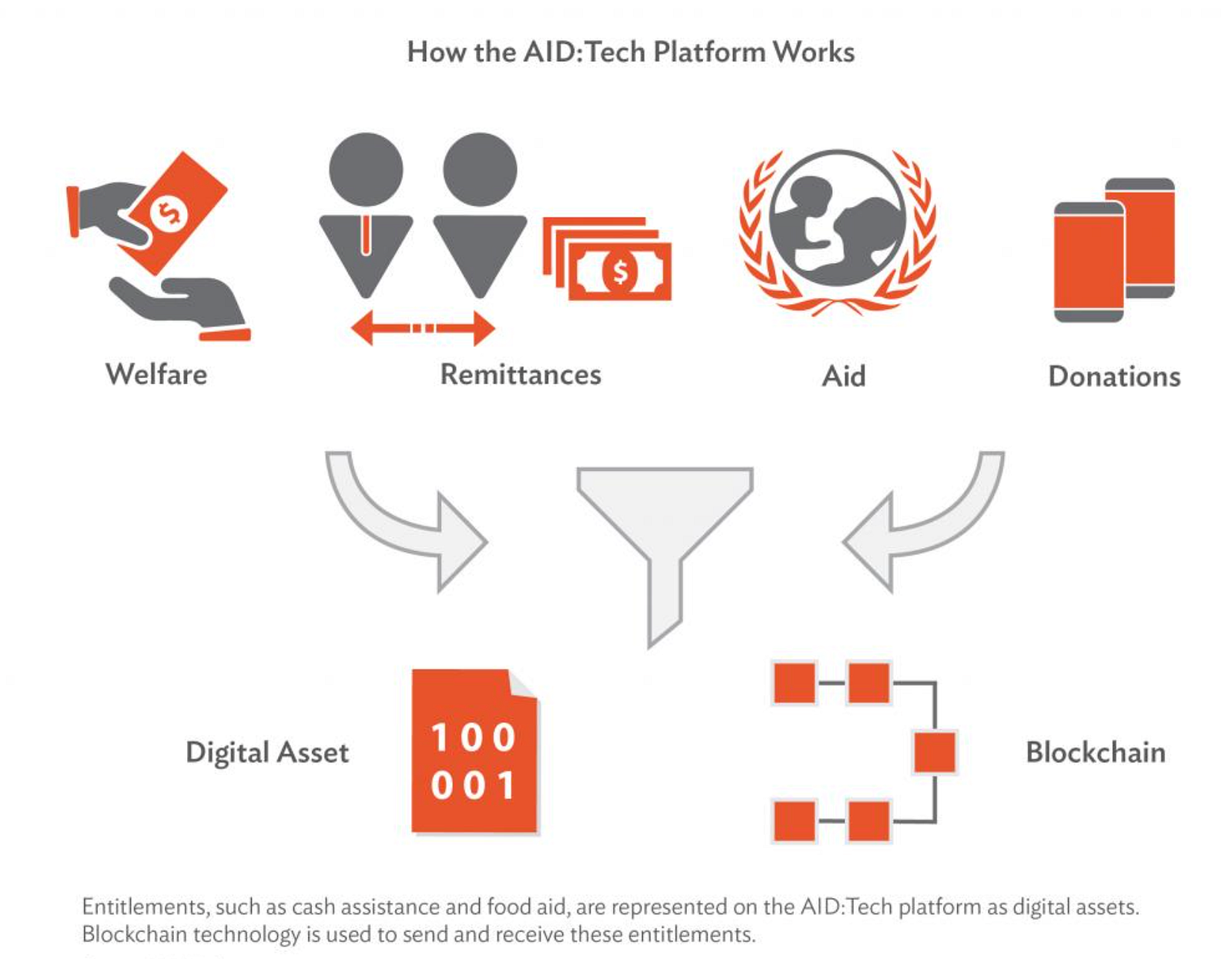
We delivered 500 QR code vouchers to 100 Syrian refugee families, each loaded with $20 in digital aid, totalling $10,000. The process was elegant in its simplicity: refugees received plastic cards with unique QR codes linked to blockchain wallet addresses. At participating supermarkets, shopkeepers scanned the QR code, an image of the cardholder appeared for verification, and the transaction was completed. Donors received an SMS notification showing exactly when and how their donation was used. You can learn more about this groundbreaking project on the OECD Observatory of Public Sector Innovation.
This was the world’s first delivery of international humanitarian aid using blockchain technology. At the time, we created a fork of the Litecoin Blockchain, with our own token serving as a medium of exchange and pegged to the US dollar. Every cent was accounted for. Every transaction was immutable. And crucially, the system caught 20 fraudulent vouchers that attempted to game the system. All failed.
“That would have been our claim to fame, if you want to put us on the map,” I have said of this project. “If we’re going to do this, and if we’re going to do it right, we have to prove that we can make the technology work in the hardest to reach places in the world.”
This experience of the “black box” of charitable giving became the catalyst for AID:Tech. The company was founded on a powerful premise: access requires identity. We set out to create a “Transparency Engine” to digitize entitlements and tether them to secure Digital Identity via Blockchain technology.
Source: Development Asia
But perhaps what moved me most was the unintended consequence: the Assad regime could not access the beneficiaries’ identities. In a war zone where being identified could mean danger, our technology inadvertently provided a layer of protection we had not even designed for. The Asian Development Bank documented this pioneering work in its case study on blockchain for aid transparency.
2016: Accelerating into the Spotlight
The Lebanon project opened doors we never knew existed. In 2016, we were accepted into Techstars London, one of the world’s most prestigious accelerator programmes. Those three months were intense. We refined our pitch, expanded our network, and began conversations with organisations that would become crucial partners.
The same year, we became finalists in the European Social Innovation Awards, placing in the top 30 out of 1,095 entries. We were also named finalists in the Irish Times Innovation Awards in the Fintech category. The validation was encouraging, but more importantly, we were building relationships with the UN, Concern Worldwide, and the International Federation of the Red Cross.
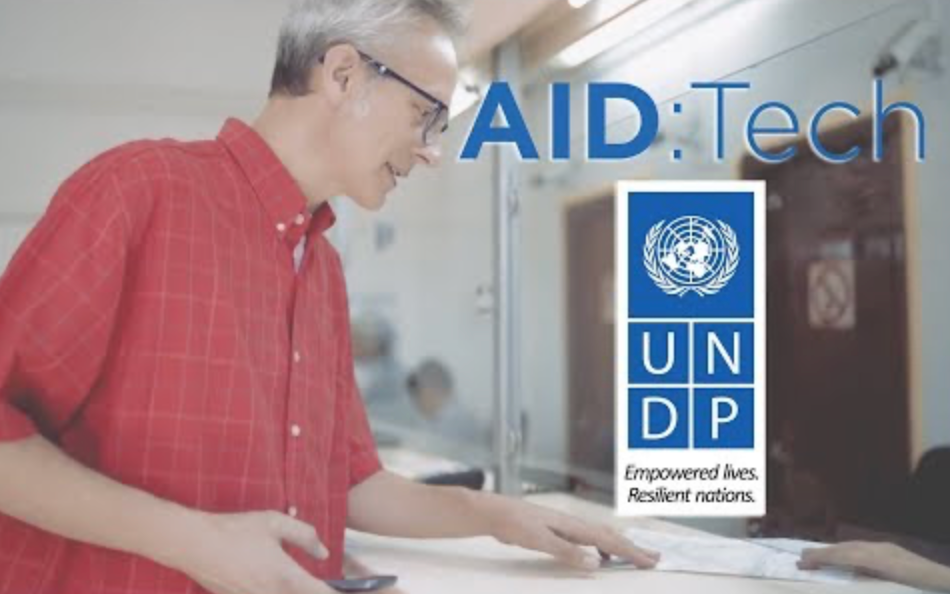
In November 2016, we were introduced to the United Nations Development Programme through our network of channel partners. This connection would prove transformative, leading to collaborations that would expand our work into international remittances and social welfare.
2017: Global Recognition and Game Changing Awards
2017 was the year the world truly took notice. In March, we won the IBM SmartCamp at Launch Festival in San Francisco, beating startups from 26 cities worldwide. The grand prize included investment from legendary Silicon Valley angel investor Jason Calacanis.
But the defining moment came on 2 October 2017 at the International Monetary Fund headquarters in Washington, D.C. We won the Citi Tech for Integrity Challenge, claiming the James Wolfensohn Game Changer Award as the top prize winner out of more than 2,000 global startups. The award was presented by none other than IMF Managing Director Madame Christine Lagarde herself. Standing on that stage, receiving recognition for “using technology to fight corruption” from one of the most influential figures in global finance, it was surreal.
Just weeks earlier, on 21 September 2017, Joseph received perhaps the most meaningful recognition of his career: he was named a UN SDG Pioneer for Blockchain, the first person ever to receive this recognition specifically for blockchain technology. Selected as one of only ten global pioneers by the United Nations, this placed AID:Tech at the very heart of the sustainable development conversation.

In November 2017, we were selected for the Mastercard Start Path programme, receiving $50,000 and invaluable mentorship. We also received pro bono legal advisory support from global law firm Clifford Chance. The ecosystem was rallying behind our mission.

2018: The First Baby Born on Blockchain and Major Funding
If 2017 was about recognition, 2018 was about proving we could scale our impact. In January, we presented at the World Economic Forum in Davos, partnering with Citi, Innovation Norway, the IFRC, NetHope, The Rockefeller Foundation, and UNDP to host a high-level panel on blockchain’s potential in humanitarian contexts.
In June 2018, we closed a funding round of approximately one million euros (roughly $1.2 million), led by SGInnovate of Singapore. This was historic: the first Singaporean state investment in a blockchain company. Additional investors included Blue Parasol Investments, Tin Fu Fund, and BlockAsset Ventures.
“As investments from a state-backed agency further signals support of this promising technology,” Joseph said at the time, “it is extremely encouraging to see these highly regarded institutions identifying blockchain as an active area of innovation.”
But the moment that still fills me with pride happened on 13 July 2018 in Tanzania. Working with Dutch NGO PharmAccess Foundation on our “Chain of Trust” initiative, we provided pregnant women with self-sovereign Digital Identities to access and track their healthcare entitlements. And on that day, baby Abdalah was born to his mother Salma, the world’s first baby born on the blockchain, according to Forbes. His birth, his mother’s pregnancy milestones, her check-up alerts, all recorded immutably on a distributed ledger.
Later that year, we partnered with Concern Worldwide and the UK Department for International Development to distribute aid to Syrian farmers. As Visa Navigate featured in their profile of our work, this was another first: transparency integrated into every stage of a humanitarian distribution process.
From July to October 2018, we piloted international remittances in Serbia with UNDP Serbia, funded by The Rockefeller Foundation. Remitters tested a new approach to cross-border money transfers, one that prioritised transparency and reduced costs.
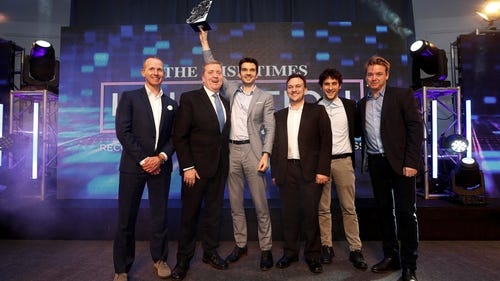
The awards kept coming: we were named IBM’s Number One Global Startup in Europe, won the Smart Dubai Blockchain Challenge, received the French Government GovTech Award in Paris, and were named to the Financial Times Top 100 Digital Champions. But the crowning achievement came in November: the Irish Times Innovation of the Year Award, the overall winner, not just the Fintech category we had been finalists for two years prior.
In December, I had the honour of speaking at TEDx Trinity College Dublin on “Blockchain for Social Impact: Accelerating the SDGs.” That same month, we launched TraceDonate in partnership with the Irish Red Cross, a Blockchain-powered donation app built on Hyperledger Fabric that allows donors to see exactly when and how their contributions are used.
2019: Asian Expansion and New Frontiers
TraceDonate was already being used to raise funds for victims of the California wildfires through the Society of St. Vincent de Paul Disaster Services in the USA. We were expanding our impact to domestic disaster relief, a direction that would become increasingly important in the years ahead.
I was named to the Irish America Magazine Wall Street 50, a recognition of Irish and Irish American leaders making an impact in finance and business. I also spoke at Inspirefest 2019, Silicon Republic’s flagship conference celebrating the intersection of science, technology, and the arts.
From September to December, we participated in Tribe Accelerator, a Singapore government-backed blockchain accelerator. Our cohort collectively raised S$21.5 million. We went on demo tours across Singapore, Dubai, Shanghai, and Abu Dhabi, expanding our network across Asia and the Middle East. Singapore was becoming a second home for AID:Tech, building on our SGInnovate investment the previous year.
In November, The Irish Times published a feature on our vision for personal data management, giving individuals control over their Digital Identities and even the ability to monetise their own data.
2020: Pandemic Pivot and Global Recognition
2020 began with Joseph being interviewed at the World Economic Forum in Davos, speaking about blockchain’s role in creating legal identities for a billion people. RTE, Ireland’s national broadcaster, captured the interview.
Then the pandemic hit. While many startups struggled, our contactless, digital-first approach suddenly became more relevant than ever. We worked with the Irish health system on exploring “immunity passport” concepts. The World Economic Forum featured AID:Tech in November 2020, highlighting our work on “creating legal identities for a billion people.”
We submitted our work to the European Commission’s Blockchains for Social Good prize, showcasing our solutions across Europe, the US, Tanzania, Singapore, the Philippines, Lebanon, and Serbia. The pandemic forced us to slow field deployments, but it gave us time to mature our APIs and technical stack.
2021: Series A and Strategic Blockchain Partnerships
2021 marked our transition from a promising startup to a funded scale-up. On 1 July 2021, we closed a $3.5 million Series A round led by Affinidi, a Temasek-seeded Digital Identity company. Our investors now included Nakhla Ventures, Richard Wang of Draper Dragon, and Josue Estrada. As I told Identity Review: “I think it’s the fact that we’re a funded startup, it’s been an achievement in itself to get to the Series A level that we are, because this game is a tough one. Probably 90% of startups fail before they get to the stage that we’re at.”
That same year, we formed major partnerships with leading blockchain protocols. In September, we announced a strategic partnership with the Cardano Foundation to develop verifiable credentials and launch “Volunteer and Earn” initiatives as part of Cardano’s RealFi vision.
In November, the Algorand Foundation awarded us a large scale grant to develop did:algo, an Algorand native Digital Identity protocol, and build a new integrated wallet in partnership with Women’s World Banking.
“Using Algorand blockchain, we are giving control back to survivors by allowing them to own, control and manage their Digital Identity,” Joseph explained. “Algorand was the platform of choice for this project, with the speed, micro costs and security we need coupled with the ability to deliver a sustainable, scalable infrastructure.”
We also partnered with Microsoft through their AI for Humanitarian Action Grant and worked with Save the Children Philippines to create Digital IDs for persons displaced from Marawi City. Additionally, we expanded our partnership with the Hedera Foundation for Digital Identity and programmable payments in the Philippines and broader Asian markets.
In December 2021, we completed our first domestic disaster relief deployment in the United States: 100 Tennessee families affected by devastating tornadoes received assistance through our platform, in partnership with St. Vincent de Paul Disaster Services Corporation.
2022: Kare Launch and American Red Cross Partnership
In August 2022, EMURGO Ventures, Cardano’s venture arm, made an investment in AID:Tech, a powerful endorsement from one of the leading players in the Cardano ecosystem, along with further investment from The Algorand Foundation.
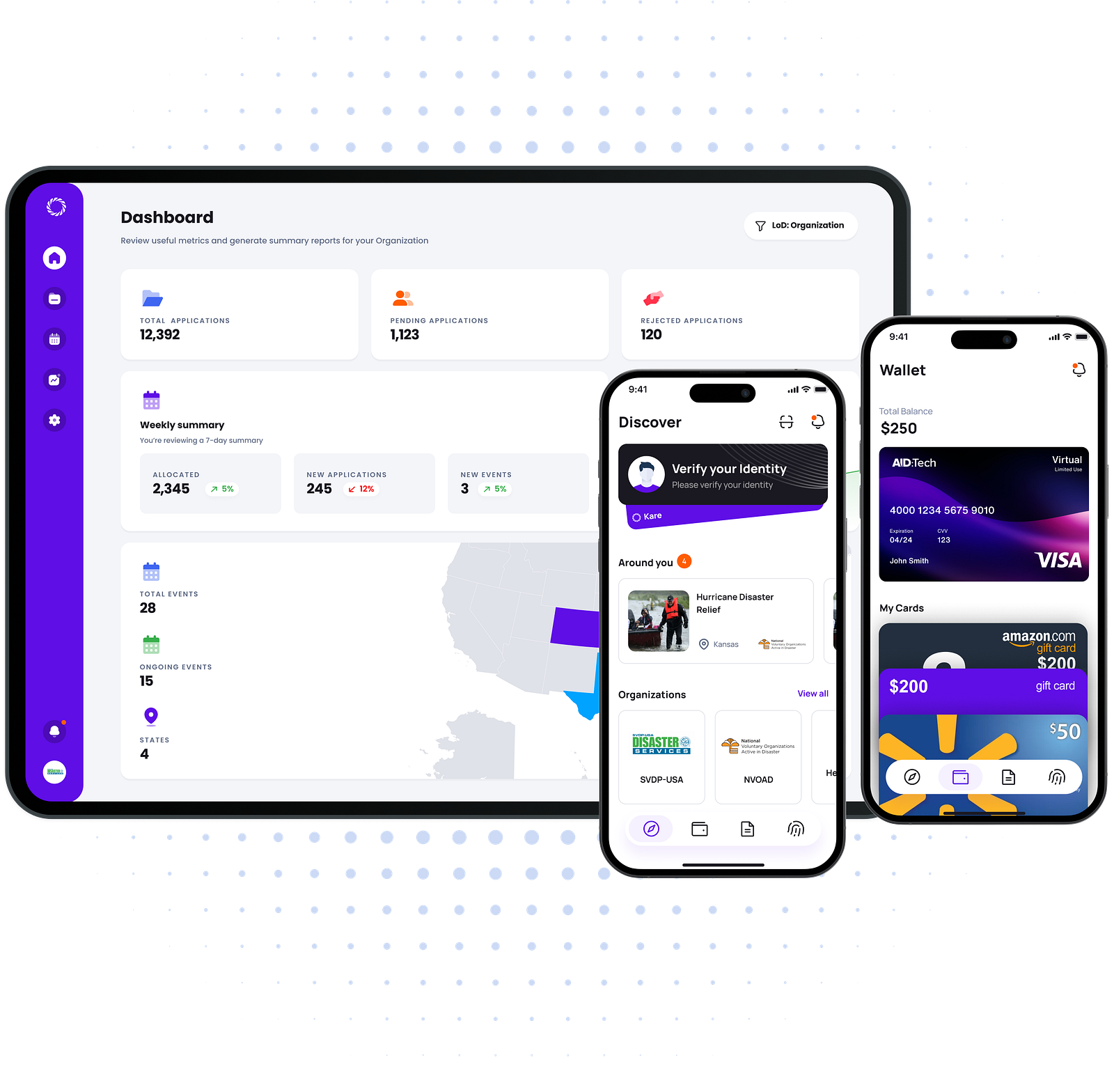
On 30 November 2022, we launched Kokua (later rebranded as Kare Survivor Wallet), a Blockchain-powered disaster relief platform built on Algorand. The platform integrated with Amazon Business via API, and we announced partnerships with the American Red Cross and National VOAD.
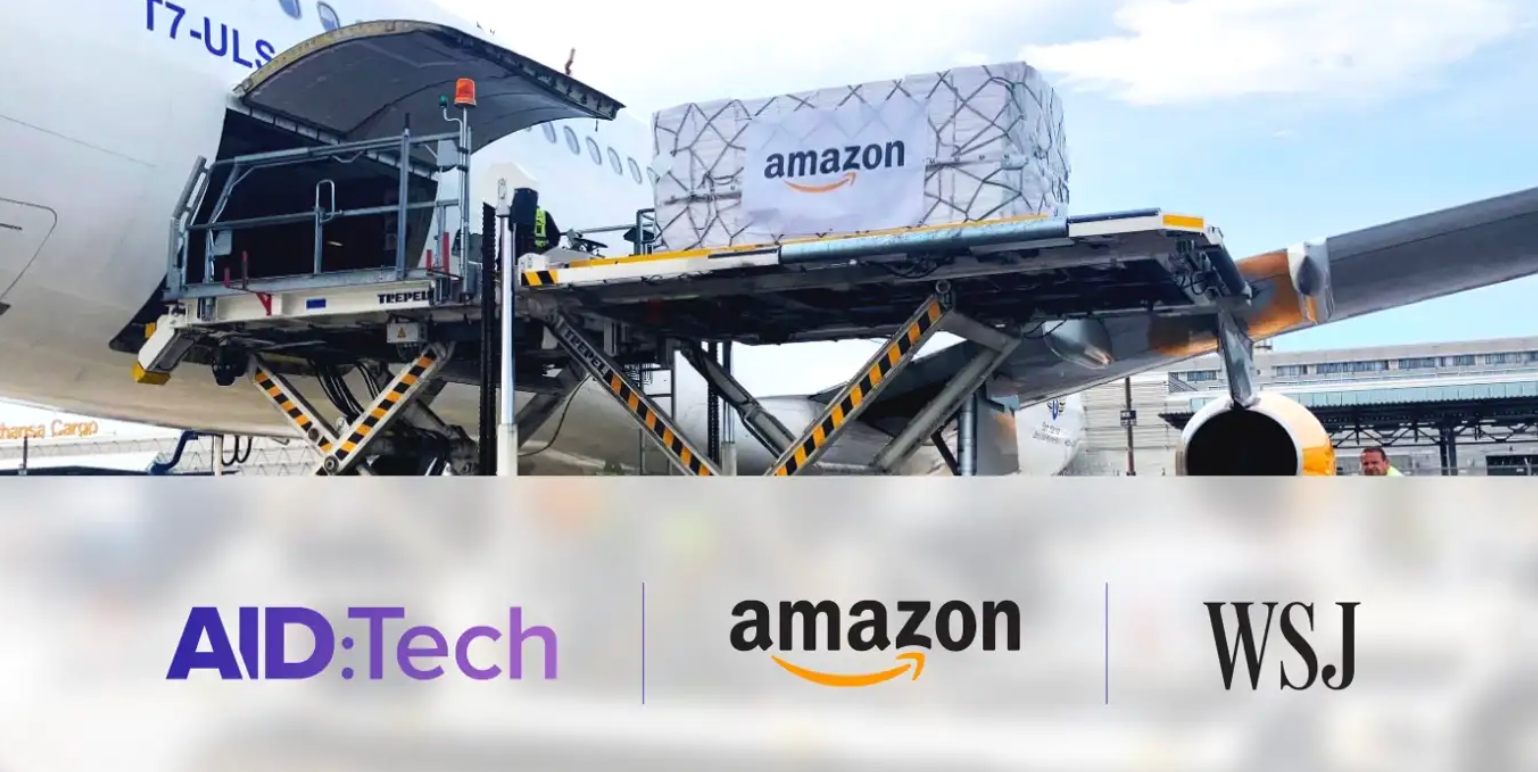
The innovation was dramatic: we reduced identity verification time from up to six months to just 24 to 72 hours. Disaster survivors could receive assistance almost immediately, rather than waiting months for bureaucratic processes. Our integration with Amazon Business APIs was featured in The Wall Street Journal.
Joseph and I presented at the Cardano Summit 2022 in Lausanne, Switzerland, showcasing how blockchain technology was transforming disaster relief. The audience response was overwhelming. People understood that this was not theoretical anymore. This was real-world impact at scale.
2023 to 2024: Scaling Kare Across America
The Kare Survivor Wallet evolved rapidly. We added Virtual Visa debit cards with Apple Pay and Google Pay integration, spend controls for partner organisations, gift card access for Amazon, Walmart, and Home Depot, GPS-based support finder features, and AI-Powered product suggestions. Our partnership with Visa and Circle for USDC stablecoin integration demonstrated that traditional finance and DeFi could work together. We also received investment from Ava Labs (Avalanche).
Kare was deployed across multiple US states: Florida in response to Hurricane Ian, Kentucky for the 2021 and 2024 tornadoes, Mississippi for the 2023 tornadoes, Louisiana for Hurricane Ida, and a pilot with FEMA in North Carolina. Following the devastating 2023 wildfires, we also expanded to Maui, Hawaii. As DSC CEO Elizabeth Disco-Shearer stated: “Where it used to take weeks if not months, we can now provide support to survivors in hours, if not minutes.”
The Kare platform integrates blockchain technology from Algorand, KYC and AML checks, and digital payments, including e-vouchers redeemable at over 700 US retailers. A pilot by DSC found that 95% of approved applicants received digital funds within one hour. In 2024, we launched the American Response and Resiliency Program (ARRP)with NVOAD ahead of hurricane season, the first program of its kind designed to rapidly meet the needs of disaster survivors while ensuring equitable access to relief.
2025: A Decade Complete
Looking back at the numbers: roughly $10 million raised across multiple rounds, more than 40 major awards, deployments in over 10 countries across Europe, North America, Africa, Asia, and the Middle East, and partnerships with five major blockchain protocols: Algorand, Cardano, Hedera, Avalanche and Hyperledger Fabric. Products include Kare Survivor Wallet, TraceDonate, Transparency Engine, and Klimify.
Looking Ahead: 2026 and Beyond
As we enter our second decade, our mission remains unchanged: to bring transparency and dignity to the flow of funds and resources for governments, NGOs, and charities worldwide. We believe that Digital Identity, and specifically decentralised Digital Identity on Blockchain technology, is the key to enabling inclusion.
For 2026, we are focused on deepening our impact in disaster relief across America, expanding our blockchain partnerships, and continuing to innovate at the intersection of Digital Identity, payments, and stablecoins. The problems we set out to solve in 2015, the $1.1 trillion lost annually from developing countries due to illicit outflows, the 30% of aid that “disappears,” the one billion people without legal identity, these challenges persist. But the technology and partnerships now exist to address them at scale.
“Blockchain is valuable where trust is missing,” I have often said. “It’s a fundamental building block to fuel transparency.” Ten years in, I believe that more than ever.
A Thank You to Our Community
None of this would have been possible without our investors, partners, team members, and the communities we serve. For all of our investors and customers: thank you for believing in our vision when blockchain for social impact was still an unproven concept.
Ten years ago, we had an idea and a conviction that technology could make aid transparent and traceable. Today, we have proof. Here is to the next ten years, and to the billions of people we have not reached yet.
